— This article by Jerry Cates was first published on 11 January 2012 and revised last on 5 May 2016. © Budsinthenews Vol. 3:1(1).
—————————————————————
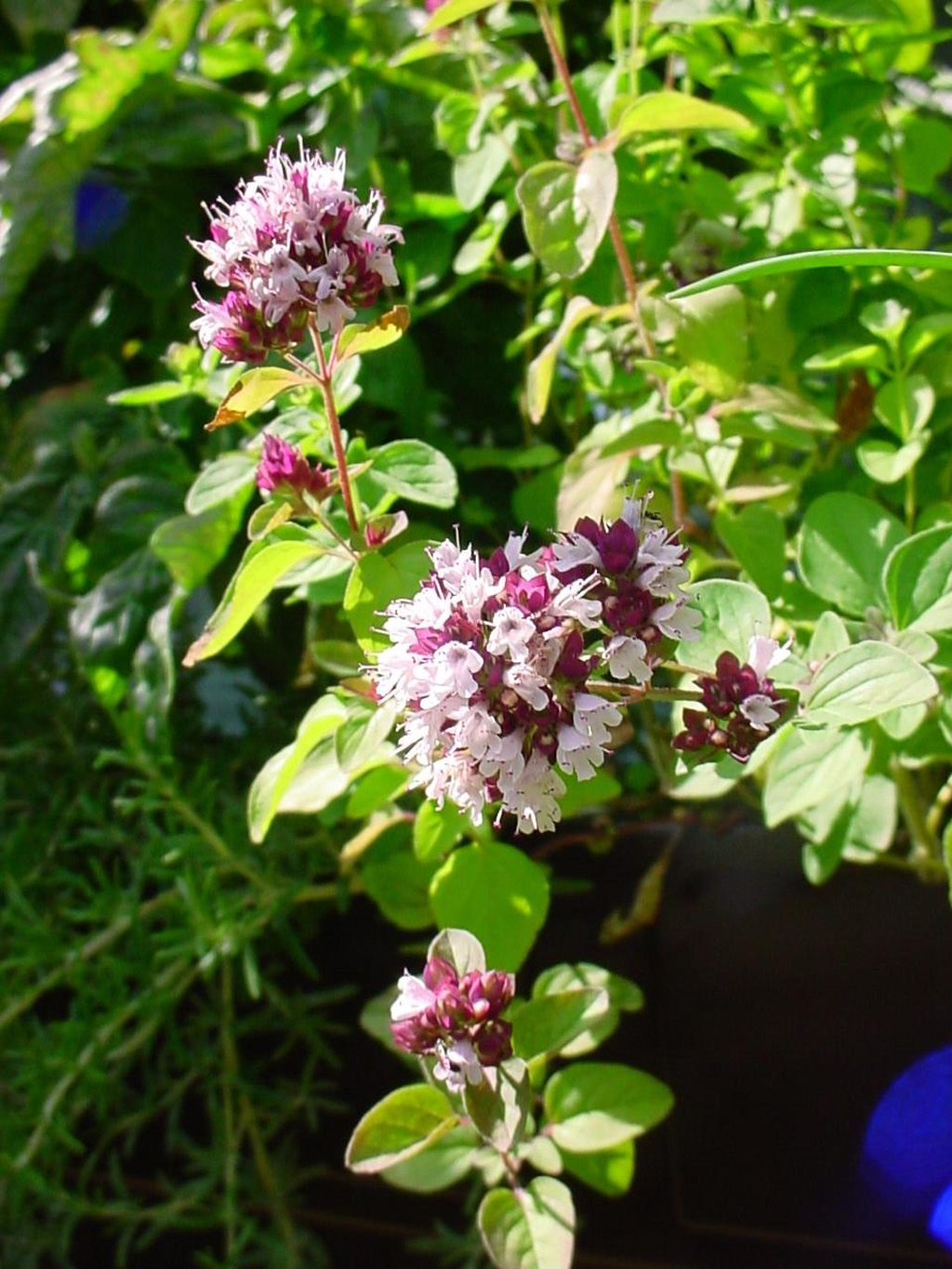
Origanum vulgare Linn.; Photo by Christian Bauer
The herb known as common oregano (Origanum vulgare Linn.) is a member of the mint family (Lamiaceae), a grouping of botanicals that are aromatic in most, if not all, parts of their plant structures, i.e., the leaves, stems, roots, and seeds.
Besides oregano, mints include a variety of familiar culinary herbs such as basil, peppermint, rosemary, sage, savory, marjoram (often substituted for oregano), thyme, lavender, and perilla. The mint family also includes shrubs such as Stauton elsholtzia (Elsholtzia stauntonii), trees such as teak (Tectona grandis), and a few vines. Many mints are easily cultivated, owing not only to their aromatic qualities but also their ease of cultivation, and often are propagated by stem cuttings, and are not only prized for culinary purposes but for decorative uses as well.
Mint leaves are decussate, or whorled (arranged oppositely, both with respect to each leaf pair as well as in successive pairs) on the stem. Many, but not all, mint stems exhibit a square cross section. Their flowers have five united petals and sepals, and are bilaterally symmetrical, typically bisexual, and verticillastrate.
Origanum vulgare is a complex herb with a long history of culinary usage, and a well-known safety profile. It is known to express, in its oils and aqueous extracts, over 21 important, individually identifiable compounds, many of which have been celebrated for centuries, by natives living within its natural range, for their medicinal properties. It, along with most of the other members of the Lamiaceae family, has been the subject of numerous scientific inquiries regarding the efficacy of its chemical constituents as — among the medicinal and health-maintinence faculties discovered long ago — antioxidants, fungicides and antibiotics.
The major components of oregano essential oil have been identified as carvacrol, β-fenchyl alcohol, thymol, and γ-terpinene. Hot water extract had the strongest antioxidant properties and the highest phenolic content, but all the hot-water extracts were ineffective in inhibiting the growth of seven bacteria they were tested with. On the other hand, the essential oil inhibited the growth of all bacteria, causing greater reductions on both Listeria strains (L. monocytogenes and L. innocua).
Another role of these constituents involves their use, singly or in combomnation, as micro-cleansers and habitat modifiers, assisting mankind in our never-ending quest to improve the quality of our lives. Analyses of scientific studies relating to these topics is underway in conjunction with a series of experiments being conducted in the EntomoBiotics Inc. laboratory. Details will be presented here, in future expansions of the content of this article. A partial list of recent scientific papers on this subject is provided below.
Carvacrol
![Carvacrol (5-isopropyl-2-methylphenol[citation needed] 2-Methyl-5-(1-methylethyl)-phenol), has the chemical formula C10H14O. is a monoterpenoid phenol with the characteristic odor of oregano.[](https://budsinthenews.info/wp-content/uploads/2012/01/Carvracol.png)
Carvacrol (5-isopropyl-2-methylphenol[citation needed]
2-Methyl-5-(1-methylethyl)-phenol), has the chemical formula C10H14O. is a monoterpenoid phenol with the characteristic odor of oregano. It is isomeric with thymol.
β-fenchyl alcohol
β-fenchyl alcohol has the chemical formula C10H18O, and is sometimes referred to as exo-α-Fenchol. The molecule is present in nature in the form of five stereoisomers, endo-Fenchol, Fenchol, Fenchol, exo-, α-Fenchol, and α-Isofenchol. Fenchol or 1,3,3-trimethyl-2-norbornanol is a terpene and an isomer of borneol. The naturally occurring enantiopure (1R)-endo-(+)-fenchol is used extensively in perfumery. Fenchol is also a scent derived from basil.
thymol
Also known as 2-isopropyl-5-methylphenol, IPMP, thymol is a natural monoterpene phenol derivative of cymene, C10H14O, is isomeric with carvacrol, is found in oil of thyme, and is extracted from common thyme (Thymus vulgaris) and various other kinds of plants. In pure form it is a white crystalline substance with a pleasant aromatic odor and strong antiseptic properties. Thymol is the source of the distinctive, strong flavor of thyme, the culinary herb. Thymol is an important biocide, as it possesses strong antimicrobial attributes when used alone or with other biocides such as carvacrol. Naturally occurring biocides such as thymol can reduce bacterial resistance to common drugs such as penicillin. Studies demonstrate that the antimicrobial effects of thymol range from inducing antibiotic susceptibility in drug-resistant pathogens to powerful antioxidant properties. Research that naturally occurring biocides such as thymol and carvacrol act as synergists. Thymol is also an effective fungicide, and is unusually effective against fluconazole-resistant fungi strains, a finding important to immuno-compromised individuals susceptible to Candida fungal infections, since current treatments for Candida are highly toxic, have a low efficacy, and often result in drug-resistant Candida strains. Compounds in the essential oils of one type of oregano have demonstrated antimutagenic effects, and in particular carvacrol and thymol were demonstrated to have a strong antimutagenic effects. Further, though the mechanism is not yet known, thymol has antitumor properties, probably through its ability to disrupt cancerous tumor cell membranes.
γ-terpinene
Within the large, diverse class of organic compounds known as terpenes are four isomeric hydrocarbons known as terpinenes. Each has the same molecular formula and carbon framework, but differ in the position of carbon-carbon double bonds. α-Terpinene (4-Methyl-1-(1-methylethyl)-1,3-cyclohexadiene), is found in nature and has been isolated from cardamom and marjoram oils, and from other natural sources. β-Terpinene (4-Methylene-1-(1-methylethyl)cyclohexene) is not found in nature, but can be prepared synthetically from sabinene. γ-Terpinene (gamma terpinene; 4-Methyl-1-(1-methylethyl)-1,4-cyclohexadiene) and δ-terpinene (delta terpinene; also known as terpinolene, 1-Methyl-4-(propan-2-ylidene)cyclohex-1-ene) are, like α-terpinene, found in nature and have been isolated from a variety of plant sources.
—————————————–
Taxonomy:
- Domain: Eukaryota (yoo-carr-ee-OH-tah) — from the Greek prefix ευ (yew) = good, well, pleasing + καρυον (khar-yone) = a nut/nucleus, thus organisms whose cells contain a nucleus and other organelles within membranes.
- (unranked): Bikonta Cavalier-Smith, 1993 (by-KOHN-tuh) — from the Latin bis = t Itwice/double + the Greek κοντος = a punting pole; those eukaryotic organisms within the subgroups Apusozoa, Rhizaria, Excavata, Archaeplastida, or Chromalveolata.
- (unranked): Archaeplastida Adl et al., 2005 (ahr-kee-PLASS-tih-duh) — from the Greek αρχαιος (AHR-kee-ose) = ancient/antiquated + πλασις (PLAS-iss) = a moulding + Anglo Saxon tid = time; a major group of eukaryotes, comprised of the red algae (Rhodophyta), the green algae, and the land plants along with the freshwater unicellular algae known as glaucophytes.
- Kingdom/Regnum: Plantae Copeland, 1956 (PLAN-tee) or Viridiplantae Cavalier-Smith, 1881 (veer-id-eye-PLAN-tee) — from the Latin planta = a green twig; the plant kingdom, consisting of multi-cellular green plants, i.e., whose cells have cellulose within their cell walls and have primary chloroplasts derived from endosymbiosis with cyanobacteria containing chlorophylls a and b and lack phycobilins..
- (unranked): Streptophyta Jeffrey 1967 (strepp-toh-PHY-tah) — from στρεπτος (STREP-tose) = (easily) twisted, pliant + φυτον (PHU-tawn) = a plant/tree; the land plants and the green algal group Charophyta.
- Subkingdom: Embryophyta Engler, 1892 (imm-bree-oh-FYE-tuh) — from the Greek εμβρυον (EMM-bree-yon) + φυτον (PHU-tawn) = a plant/tree; green plants, informally known as land plants because most are terrestrial rather than aquatic, while the related green algae are primarily aquatic;
- (unranked): Angiosperms (AN-gee-oh-spurms)/Magnoliophyta Cronquist (mag-NOH-lee-oh-fye-tuh) — from the Greek αγγειον (AUGG-ee-awn) = a vessel/pail/reservoir + σπερμα (SPUR-mah) = a seed; the flowering plants, distinguished from the gymnosperms by having flowers, endosperm within the seeds, and the production of fruits that contain the seeds;
- (unranked) Eudicots (YEW-dee-kotts) — from the Greek prefix ευ (yew) = good, well, pleasing + δι (die/dee) = two/double + κοτυληδων (cott-ee-LEE-dun) = a cup-shaped hollow; a monophyletic clade of flowering plants previously known as tricolpates or non-magnoliid dicots, to emphasize the evolutionary divergence of tricolpat dicots from earlier, less specialized dicots; close relationships are presumed among flowering plants with tricolpate pollen grains (the grains have three colpi, or elongated apertures or furrows in the pollen grain paralleling the polar axis);
- (unranked) Asterids (ASS-tur-iddz) — from the Greek αστηρ (ASS-turr) = a star/meteor + the Latin suffix -idus (EE-duss) = indicative of having the nature of; one of the two most species group of eudicots (which have inflorescences having the appearance of a meteor or shooting star), the other being the rosids;
- Order: Lamiales (lam-ee-AWL-ees) — the etymology of this designation is obscure; comprised of asterids generally having a superior ovary composed of two fused carpels, inflorescences with four petals fused into a tube, bilaterally symmetrical, often bilabial corollas, and four or fewer fertile stamens;
- Family: Lamiaceae — the etymology of this designation is obscure; comprised of the mint or deadnettle family of flowering plants containing about 236 genera and some 6,900 to 7,534 species, many aromatic in all parts, others being shrubs, trees (incl. teak), and some vines;
- Subfamily: Nepetoideae — from the Latin noun nepeta = catnip, a kind of mint; a subfamily of the mint family divided into four tribes: 1. Tribe Elsholtzieae, 2. Tribe Lavanduleae (includes lavender), 3. Tribe Mentheae (the largest tribe, containing the herbs sage, thyme, and mint), and 4. Tribe Ocimeae (includes sweet basil);
- Tribe: Mentheae (MEN-thay-ee) — from the Latin noun menthe = mint; comprised of one third of the species of the mint family, Lamiaceae; common names of plants within this tribe are apple-mint, corn-mint, ginger mint, horsemint, mint, orange-mint, pennyroyal, peppermint, spearmint, and watermint;
- Genus: Origanum (oh-ree-GANN-uhm) — the etymology of this name is obscure; herbaceous perennials and subshrubs native to Europe, North Africa, and temperate Asia that grow in open or mountainous habitats, with aromatic leaves and numerous tubular flowers; comprised of 54 recognized species;
- Species: O. vulgare L. (vull-GARE-ee) — from the Latin adjective vulgates = common/generally accessible/commonly known; a perennial herb growing 20-80 cm tall with opposite leaves 1-4 cm in length.
—————————————–
References:
- Adams, Amber, et al. 2011. Anti-yeast activities of Origanum oil against human pathogenic yeasts. Advances in Bioscience and Biotechnology, 2011, 2, 103-107
- Ashrafi, Zaman, et al. 2011. In Vitro Antibacterial and Antifungal Activity of Methanol, Chloroform and Aqueous Extracts of Origanum vulgare and Their Comparative Analysis. International Journal of Organic Chemistry, 2011, 1, 257-261
- Benevides, Victor, et al. 2010. Effects of aqueous extract of Origanum vulgare L. (Lamiaceae) on the preimplantational mouse embryo. Review of Peruvian Biology 17(3):381-384.
- Cervato, Giovanna. 2000. Antioxidant Properties of Oregano (Origanum vulgare) Leaf Extracts. Journal of Food Biochemistry 24 (2000) 453-465.
- Cioroi, Maria. 2009. Study on total polyphenols and reducing power of aqueous extracts from selected Lamiaceae species. Journal of Agroalimentary Processes and Technologies 15(4):521-524
- De Falco, Enrica, et al. 2013. Chemical Composition and Biological Activity of Essential Oils of Origanum vulgare L. subsp. vulgare L. under Different Growth Conditions. Molecules 2013, 18, Khan, Aslam, et al. 2011. Antiurolithic activity of Origanum vulgare is mediated through multiple pathways. BMC Complementary and Alternative Medicine 2011, 11:96.
- Kulišic. Tea, et al. 2006. Antioxidant Activity of Aqueous Tea Infusions Prepared from Oregano, Thyme and Wild Thyme. Food Technol. Biotechnol. 44 (4) 485–492.
- Naima, Oukil, et al. 2011. Antioxidant activity and separation of phenolic compounds of Origanum glandulosum from north Algeria by high performance liquid chromatography (HPLC). African Journal of Biotechnology Vol. 10(17), pp. 3451-3454
- Nisha, M. C., et al. 2010. Comparative Studies on Antimicrobial Activity of Artemisia Sieversiana Ehrhart. Ex. Willd. and Origanum vulgare L. International Journal of PharmTech Research 2(2):1124-1127
- Sheibani, Vahid, et al. 2011. Evaluation of Origanum Vulgare L. ssp. Viridis Leaves Extract Effect on Discrimination Learning and LTP Induction in the CA1 Region of the Rat Hippocampus. Iranian Journal of Basic Medical Sciences 14(1):177-184.
- Sartoratto, Adilson, et al. 2004. Composition and Antimicrobial Activity of Essential Oils from Aromatic Plants Used in Brazil. Brazilian Journal of Microbiology (2004) 35:275-280
